How we checked this
We reviewed the linked sources and keep this page updated when the record changes. Use the source list below to verify the details.
Key points
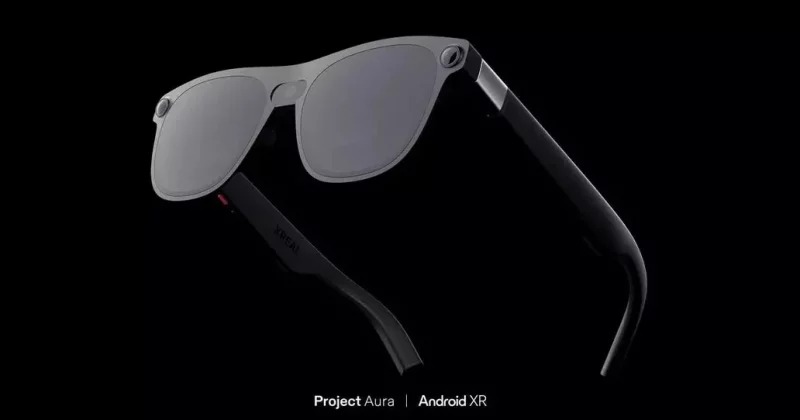
Google has officially unveiled Project Aura, a new smart glasses initiative developed in collaboration with XREAL. These lightweight glasses, running on Android XR, represent Google’s most significant venture into wearable spatial computing. While the initial launch targeted for 2026 does not include direct crypto integrations like wallet support or NFT displays, the underlying Android XR platform opens a potential pathway for decentralized applications (dApps) in the future.
This development positions Google alongside other tech giants like Meta and Apple in the race to define the next generation of computing interfaces, which could eventually impact how users interact with Web3 protocols and digital assets.
Key facts
- Product Name: Project Aura
- Partners: XREAL, Samsung, Warby Parker, Gentle Monster
- Operating System: Android XR
- Targeted Launch: 2026
The Technical Foundation
The Project Aura glasses are designed to be lightweight, weighing approximately 90 grams. To achieve this, much of the processing power and battery capacity are offloaded to a pocket-sized compute puck, which is wired to the glasses. This puck houses Qualcomm’s Snapdragon XR2+ Gen 2 chip, a powerful processor designed for extended reality (XR) applications. The optical see-through displays offer a 70-degree field of view, providing an immersive experience without completely isolating the user from their physical surroundings.
The Android XR operating system is a crucial component of Project Aura. It is the same OS that powers Samsung’s Galaxy XR headset, meaning Project Aura inherits an existing app ecosystem from day one. This shared platform could facilitate broader adoption and developer interest, as applications built for one Android XR device can potentially be adapted for others. The glasses will also support Windows desktop streaming, expanding their utility for productivity and professional tasks.
AI Integration and Use Cases
Artificial intelligence (AI) features are deeply integrated into Project Aura, offering functionalities like real-time translation, navigation overlays, and contextual information surfacing. Google is targeting "episodic applications," which are tasks where users wear the glasses for specific durations rather than all day. Examples include using the glasses for navigation during a walk, translation during a conversation, or accessing reference information during a repair job. This approach suggests a focus on practical, on-demand utility rather than continuous, always-on wear.
Google has also secured partnerships with major brands like Samsung, Warby Parker, and Gentle Monster to further expand the XR and AI glasses ecosystem. These collaborations could lead to a wider range of hardware designs and applications, making the technology more accessible and appealing to diverse user groups.
Web3 Potential and Future Integration
While Project Aura currently lacks native crypto integration—meaning no direct wallet support, token gating, or NFT galleries—its foundation on Android XR presents a significant opportunity for future Web3 adoption. The Android developer ecosystem is vast, and any decentralized application built for Android could theoretically be adapted for spatial computing environments like Project Aura.
A 70-degree field of view combined with AI-driven contextual awareness creates a new canvas for dApp interfaces. Imagine interacting with smart contracts, verifying digital ownership, or viewing on-chain data through an augmented reality overlay. This could transform how users engage with decentralized finance (DeFi), NFTs, and other Web3 applications, making them more intuitive and integrated into daily life. The 2026 launch window coincides with a period when many Layer 2 networks and wallet providers are actively developing mobile-first experiences, hinting at a potential convergence of these technologies.
Historical Context and Ecosystem Depth
Google’s history with new hardware platforms is mixed, notably with the Google Glass project launched in 2013, which ultimately faced challenges and was shelved. However, Project Aura appears to benefit from a deeper ecosystem and stronger partnerships. The involvement of Samsung as a hardware partner, Qualcomm providing purpose-built silicon, and the existing Android developer base numbering in millions significantly enhances Project Aura's potential for success. This robust support system minimizes the risks associated with developing a new computing paradigm.
The competition in the spatial computing space is intense, with Meta’s Orion prototype and Apple’s Vision Pro also vying for dominance. Each platform aims to become the next major interface for digital interaction, and their respective approaches to developer ecosystems and user experience will be critical factors in their long-term viability. For crypto users, these developments could mean more immersive and integrated ways to manage digital assets and interact with decentralized services, potentially improving both convenience and security if properly implemented. The focus on episodic use cases may also reduce the risk of constant digital distraction, allowing for more focused interactions with dApps when needed.
Source: Crypto Briefing RSS: Google unveils Project Aura Android XR glasses with new features (https://cryptobriefing.com/google-project-aura-android-xr-glasses/)
Update log
- 20 May 2026Published with source tracking and reader-safety context.
- CorrectionsIf a source changes or a claim needs clarification, this page can be updated from the editorial desk.