
How we checked this
We reviewed the linked sources and keep this page updated when the record changes. Use the source list below to verify the details.
Key points
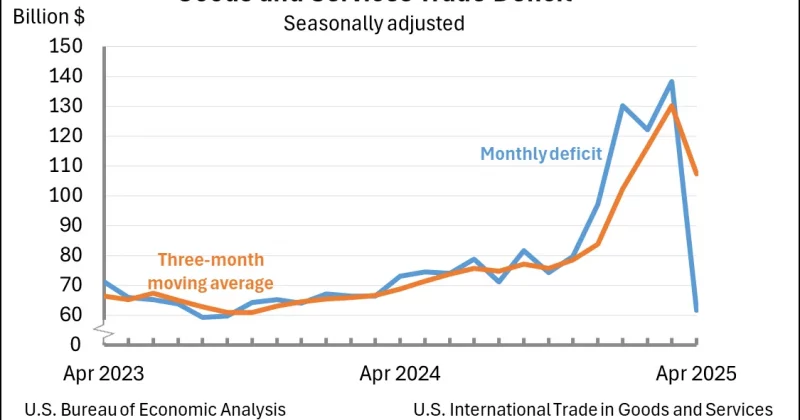
The United States experienced a notable reduction in its goods trade deficit in April, with the gap shrinking by nearly $3 billion. This improvement was primarily driven by a substantial 4% surge in exports, which outpaced the more modest 1.9% rise in imports. The data, released by the Census Bureau on May 29, indicates a positive shift in the country's trade dynamics.
This narrowing trade deficit tends to be a dollar-positive development. When a country exports more goods and services relative to its imports, foreign buyers require more of that country's currency to make purchases. This increased demand can lead to upward pressure on the currency's value.
Why it matters
Key facts
| Metric | April 2026 | March 2026 (Revised) | Change |
|---|---|---|---|
| Goods Trade Deficit | $82.4 billion | $85.3 billion | -$2.9 billion |
| Exports | $219.7 billion | $211.2 billion | +$8.5 billion (4.0%) |
| Imports | $302.1 billion | $296.5 billion | +$5.6 billion (1.9%) |
For the broader US economy, this trend signifies a potentially strengthening dollar. A stronger dollar can make imported goods cheaper for American consumers and businesses, while making US exports more expensive for foreign buyers. However, the overall impact is complex and depends on various economic factors.
The export gains in April were led by increases in capital goods, industrial supplies, and consumer goods. Additionally, retail and wholesale inventories saw an increase, suggesting that businesses are actively stocking up on goods. The ongoing tariff regime, implemented in 2025, continues to influence trade data. Initial responses to tariffs involved front-loading imports, which artificially inflated the deficit in previous periods.
The full picture of America's trade position will be available on June 9 with the release of the complete goods and services trade balance data. This report will provide a more comprehensive view, including revisions to April's preliminary numbers, which have historically seen adjustments. In March, for instance, initial deficit estimates were revised down by approximately $2 billion to $3 billion.
Implications for cryptocurrency markets
The strengthening of the US dollar, often associated with a narrowing trade deficit, can have a direct impact on cryptocurrency markets. Bitcoin and other digital assets are frequently viewed as hedges against fiat currency devaluation. If the dollar strengthens due to improving trade fundamentals, the attractiveness of cryptocurrencies as a hedge may diminish in the short term.
This could lead to reduced demand for cryptocurrencies as investors re-evaluate their portfolio allocations. Conversely, a weaker dollar typically makes assets priced in dollars, like Bitcoin, relatively cheaper for holders of other currencies, potentially increasing demand.
Traders and investors in the crypto space will be closely monitoring the upcoming June 9 release for further confirmation and potential market reactions. The interplay between macroeconomic indicators like the trade balance and the volatile cryptocurrency market is a key area of focus for understanding broader asset class movements.
The trend suggests a shift away from the historically large trade gaps the US has experienced. Year-over-year, the reduction in the deficit through early 2026 stands at about 24%, a significant change.
Source: Crypto Briefing - US goods trade deficit narrows to $82.4B in April as exports surge - https://cryptobriefing.com/us-goods-trade-deficit-narrows-april/
Key facts
| Point | Detail |
|---|---|
| Source | Crypto Briefing RSS |
| Date | 2026-05-29T12:37:04+00:00 |
| Topic | US goods trade deficit narrows to $82.4B in April as exports surge |
Update log
- 29 May 2026Published with source tracking and reader-safety context.
- CorrectionsIf a source changes or a claim needs clarification, this page can be updated from the editorial desk.