
How we checked this
We reviewed the linked sources and keep this page updated when the record changes. Use the source list below to verify the details.
Key points
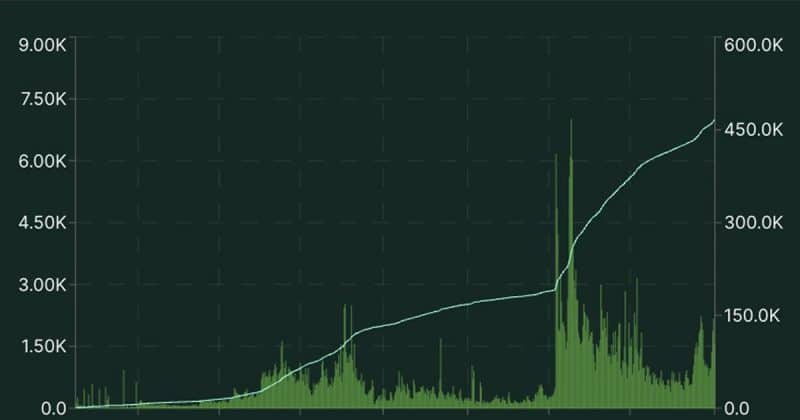
Hyperliquid, a decentralized perpetual futures exchange, has achieved a remarkable financial milestone, generating an estimated $700 million in annualized revenue from approximately $3 billion in collateral. This performance positions the platform as a self-sustaining entity within the decentralized finance (DeFi) ecosystem, raising questions about the future reliance on venture capital for growth.
The exchange's operational model has been likened to a casino that has built its success without external investment. The impressive revenue figures translate to roughly 23 cents in annual revenue for every dollar deposited on the platform. Hyperliquid's annualized revenue estimates range from $700 million to $1.2 billion, depending on the measurement period, with cumulative revenue having surpassed the $1 billion mark. In the last 30 days alone, the platform has recorded approximately $60 million in revenue.
Why it matters
The primary driver of this revenue is the substantial trading volume processed by Hyperliquid. Since its launch, the platform has facilitated over $4.7 trillion in cumulative perpetual futures volume. In the recent 30-day period, perpetual futures volume exceeded $250 billion, with open interest currently standing at around $9 billion. The exchange's activity has even drawn comparisons to traditional financial markets, such as the Nasdaq.
Hyperliquid operates with a lean fee structure. Maker fees are set at 0.015%, taker fees at 0.045%, and crucially, gas fees are zero, a significant advantage for high-frequency traders. A unique aspect of its revenue model is the allocation of 99% of certain fee revenues towards purchasing its native token, HYPE, on the open market.
Launched around 2023, Hyperliquid bootstrapped its growth without any venture capital funding. It utilizes a custom Layer-1 blockchain powered by HyperBFT consensus, which enables a fully on-chain order book. The native token, HYPE, currently trades around $64 to $65, boasting a market capitalization of approximately $14 billion, having previously reached an all-time high of $77. The token's value proposition is further enhanced by staking rewards and fee discounts offered to holders, incentivizing engagement beyond speculative trading.
Recent strategic expansions have seen Hyperliquid broaden its offerings beyond crypto perpetuals. The platform has introduced off-chain event contracts and S&P 500 perpetuals, signaling an ambition to compete not only with other decentralized exchanges (DEXs) but also with centralized exchanges and prediction markets like Polymarket.
The absence of venture capital in Hyperliquid's financial structure means there are no early investors with heavily discounted tokens poised for large sell-offs, nor are there unlock schedules that could impact market dynamics. The price of the HYPE token is primarily influenced by buybacks, demand from staking, and organic trading activity.
The platform's revenue is heavily reliant on perpetual futures trading volume. The expansion into event contracts and traditional equity perps appears to be a strategic move to diversify its revenue streams and mitigate concentration risk. For investors considering HYPE, the 99% fee-to-buyback ratio creates a direct correlation between platform usage and token demand. With a current market capitalization of $14 billion, the key question for market participants is whether the valuation already reflects Hyperliquid's sustained dominance or if the current monthly volume of $250 billion represents just the beginning of its growth trajectory.
Key facts
| Metric | Value |
|---|---|
| Annualized Revenue | ~$700 million |
| Collateral Base | ~$3 billion |
| 30-Day Revenue | ~$60 million |
| Cumulative Trading Volume | >$4.7 trillion |
| 30-Day Trading Volume | >$250 billion |
| HYPE Token Market Cap | ~$14 billion |
Hyperliquid's success without venture capital funding offers a compelling case study for other DeFi projects. By generating substantial revenue and directing a significant portion back to its native token, the platform demonstrates a model that aligns user activity directly with token value. This approach could set a precedent for future decentralized exchanges, potentially shifting the focus from venture-backed growth to organic, user-driven development. The expansion into new markets also suggests a strategy to build a more resilient and diversified financial platform. For users, this could translate to a more stable and robust trading environment, less susceptible to the market pressures often associated with VC-backed projects.
Source: https://cryptobriefing.com/hyperliquid-700m-revenue-3b-collateral/
Source-tracked CryptoRescue article.
Update log
- 26 Jun 2026Published with source tracking and reader-safety context.
- CorrectionsIf a source changes or a claim needs clarification, this page can be updated from the editorial desk.