
How we checked this
We reviewed the linked sources and keep this page updated when the record changes. Use the source list below to verify the details.
Key points
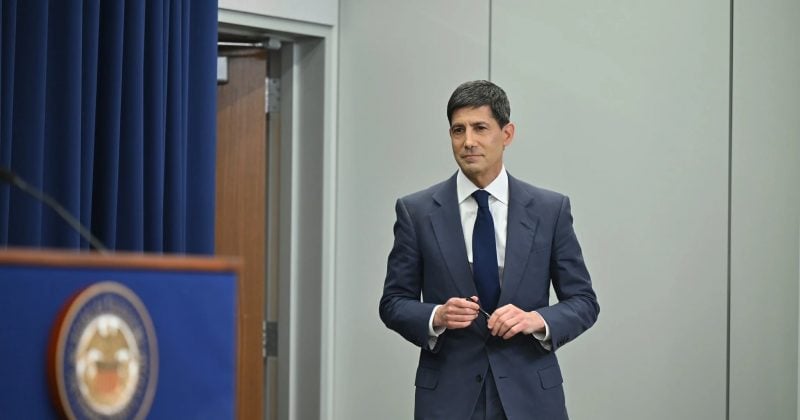
Two months into his tenure as the 17th Federal Reserve chair, Kevin Warsh has announced five external task forces to fundamentally rethink how the central bank conducts monetary policy. But digital assets — Bitcoin, stablecoins, tokenization, central bank digital currencies — are nowhere in the scope.
Warsh announced the task forces on July 9, 2026, with recommendations due by the end of the year. The groups bring in heavyweights from outside the Fed, including venture capitalist Marc Andreessen, former Bank of England governor Mervyn King, and former Reserve Bank of India governor Raghuram Rajan. The aim is to rewrite the playbook on communications, balance sheet management, data usage, the impact of artificial intelligence, and inflation targeting.
Key facts
| Task force | Focus area | Notable co-lead |
|---|---|---|
| Communications | How the Fed telegraphs policy decisions | Not specified in the announcement |
| Balance sheet | Management of Treasury and mortgage-backed securities portfolio | Not specified |
| Data and analytics | Modernizing data inputs for policy decisions | Not specified |
| Productivity and AI | How AI reshapes jobs and economic output | Marc Andreessen |
| Inflation framework | Revisiting the 2% inflation target and post-2020 approach | Not specified |
What the task forces cover
Warsh has described his vision as a “regime change” in monetary policy. He wants less reliance on forward guidance — the practice of telling markets months in advance what rates will do — and a tighter focus on the dual mandate of maximum employment and price stability. He has called inflation “a choice” and wants a “good family fight” over policy ideas within the institution.
Each task force has a specific remit. The AI and productivity group, co-led by Andreessen, will examine how artificial intelligence might reshape jobs and economic output. The balance sheet task force will look at how the Fed manages its huge holdings of Treasury and mortgage-backed securities. The inflation framework group is revisiting the post-2020 approach to inflation targeting, including the fixed 2% target that has defined central bank orthodoxy for decades.
Crypto’s conspicuous absence
None of the five task forces include digital assets, stablecoins, tokenization, or central bank digital currencies. The omission is notable because the Fed’s stance on crypto has been a topic of debate in recent years. Under former chairs, the Fed issued reports on stablecoins, explored a CBDC, and signaled caution about private digital currencies. Warsh has made no public statements on crypto during his first two months.
The absence suggests that the current Fed leadership does not see crypto as an immediate priority for monetary policy redesign. This could be interpreted as a neutral stance — neither friendly nor hostile — but it also means that crypto is not getting a seat at the table when the rules that affect all asset markets are being rewritten.
How monetary policy changes ripple into crypto
Even though crypto is not on the agenda, the task force recommendations will affect digital asset markets. The Fed’s inflation framework determines the path of interest rates, which influence the risk appetite for speculative assets including cryptocurrencies. A tighter inflation target could mean higher rates for longer, making risk-on assets like Bitcoin less attractive relative to yield-bearing instruments. A looser framework could fuel liquidity and drive prices up.
The balance sheet task force could also have indirect effects. The Fed’s holdings of Treasury and mortgage-backed securities affect the liquidity available in the financial system. Any decision to shrink or expand the balance sheet influences the availability of dollars for trading, lending, and investing across all markets, including crypto.
The current federal funds rate stands at 3.5%–3.75%, held steady amid what Warsh has described as healthy economic conditions. If the task forces recommend a shift in the inflation target or a change in how the Fed communicates its intentions, the market reaction could be swift.
What crypto users should watch
Investors and crypto users should monitor the task force recommendations when they are released later this year. Any change to the inflation framework or balance sheet strategy will ripple through every asset class, including crypto. The composition of the task forces also signals which outside voices are shaping Fed thinking. Andreessen’s involvement on the AI task force may bring a tech-forward perspective, but it does not guarantee a pro-crypto tilt.
For now, the Fed is running experiments in how it makes policy, but crypto is not part of the lab. That could change if task force members raise it, or if a later phase expands the scope. As of July 2026, the message from the central bank’s monetary policy overhaul is clear: crypto is still not a core concern for the world’s most powerful monetary authority.
Source: Crypto Briefing – "New Fed chair Kevin Warsh launches five task forces to overhaul monetary policy, and crypto is nowhere on the agenda" (https://cryptobriefing.com/fed-chair-warsh-task-forces-monetary-policy/)
Update log
- 26 Jul 2026Published with source tracking and reader-safety context.
- CorrectionsIf a source changes or a claim needs clarification, this page can be updated from the editorial desk.